


Britain is a country bursting with entrepreneurial talent. Every day, millions of people risk their own money, employ staff, meet payroll, solve problems and compete in some of the toughest markets in the world. Yet the people running our country have, for the most part, never experienced any of it.
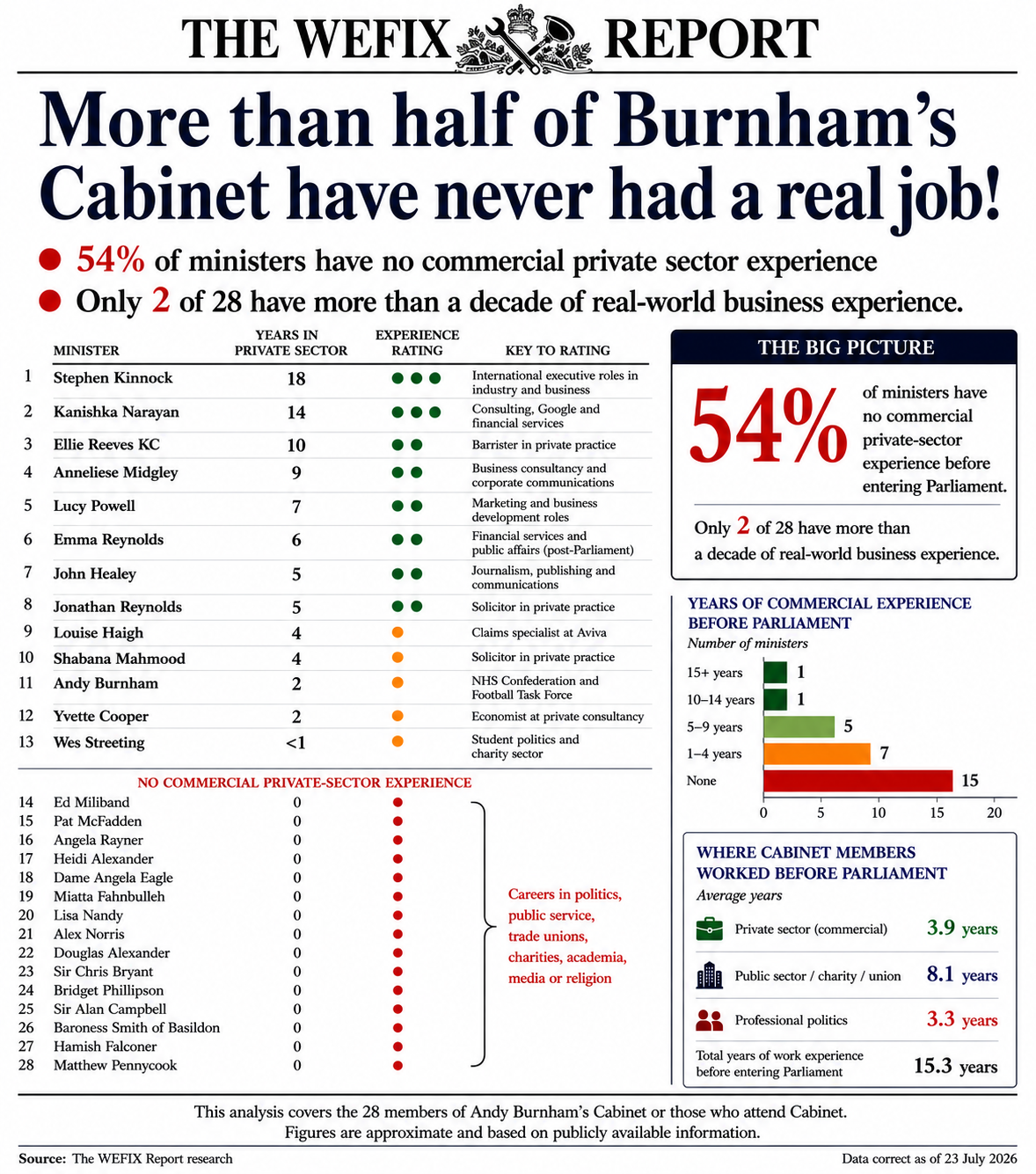
More than half of Andy Burnham’s Cabinet had no commercial private-sector experience before entering Parliament. Most have spent their working lives in politics, the public sector, charities or trade unions. Only two are estimated to have accumulated more than a decade of commercial business experience before becoming MPs.
Now consider the scale of what they are responsible for. The UK economy generates around £3 trillion of output each year. It supports millions of jobs, hundreds of thousands of businesses and carries public debt measured in trillions of pounds. It is, in effect, the largest and most complex enterprise in the country.
Would any FTSE 100 board recruit someone with little or no commercial experience to run a multinational company of that size? Of course not. Even the Cabinet’s most commercially experienced members would struggle to convince shareholders they were ready to become chief executive of one of Britain’s largest listed businesses.
Yet we routinely hand responsibility for the nation’s finances to people whose careers have been spent almost entirely inside Westminster and Whitehall.
Perhaps that helps explain why Britain combines world-class entrepreneurs with sluggish growth, rising debt and an economy that too often feels held back rather than unleashed. Successful businesses survive by creating value, managing costs and living within their means. Governments can postpone those disciplines for a while by borrowing.
Britain doesn’t lack people who know how to build successful organisations. The question is why so few of them ever end up running the country.